



7/2場次為Michael Veale教授來台系列方便上班族的下班時間場次,將以更充裕的時間分享並與參與者互動。本場次將以英文進行,不會有翻譯。具有同步口譯以及三位與談人的座談會,為7/1在台大霖澤館的場次。 近年來有關數位公共基礎設施的討論在國際上愈發頻仍,其中涉及數位身分、資料交換與數位支付三大議題。前兩大項正是台灣政府部分近年多方嘗試的發展主題,然而從New eID政策的推動過程,到目前正在試辦中的數位憑證皮夾,不管是個資保護的隱私權,還是平等近用服務的保障都未在制度層面落實。除此之外,公民社會在政策發展過程嘗試以政府資訊公開法釐清標案成果,也面臨重重挑戰。新興的科技方案在缺乏保障基本權的制度與透明問責下茁壯。國際上屢見不顯的數位身分強迫同意、數位足跡保存問題,當歐盟先確立制度時,台灣卻頻頻在制度保障中選擇留白。 Michael Veale為倫敦大學學院法學院教授,專長為機器學習、加密技術、網路等數位科技領域的相關法律,也有過多項政府資訊公開申請經驗。Michael Veale的研究影響監管機關的政策制定,曾受歐盟執委會、英國與加拿大個資保護機關等單位諮詢。 時間:7月2日(四)19:00-21:00 地點:台灣人權促進會台北辦公室 講者:Michael Veale(倫敦大學學院 法學院教授) 演講主題:Digital Rights in a World of AI Misuse

近年來有關數位公共基礎設施的討論在國際上愈發頻仍,其中涉及數位身分、資料交換與數位支付三大議題。前兩大項正是台灣政府部分近年多方嘗試的發展主題,然而從New eID政策的推動過程,到目前正在試辦中的數位憑證皮夾,不管是個資保護的隱私權,還是平等近用服務的保障都未在制度層面落實。除此之外,公民社會在政策發展過程嘗試以政府資訊公開法釐清標案成果,也面臨重重挑戰。新興的科技方案在缺乏保障基本權的制度與透明問責下茁壯。國際上屢見不顯的數位身分強迫同意、數位足跡保存問題,當歐盟先確立制度時,台灣卻頻頻在制度保障中選擇留白。 本場座談會邀請英國的科技法學者,進行資訊隱私與政府資訊公開的主題演講,並透過台灣與談人討論政府資訊公開的實作與挑戰,促進未來在數位身分與資料交換議題上的資料治理與民主監督。 Michael Veale為倫敦大學學院法學院教授,專長為機器學習、加密技術、網路等數位科技領域的相關法律,也有過多項政府資訊公開申請經驗。Michael Veale的研究影響監管機關的政策制定,曾受歐盟執委會、英國與加拿大個資保護機關等單位諮詢。 講者:Michael Veale(倫敦大學學院 法學院教授) 與談:范姜真媺(東海大學法律學系退休教授 )、邱文聰(中研院法律所研究員)、吳全峰(中研院法律所資訊法中心主任 )
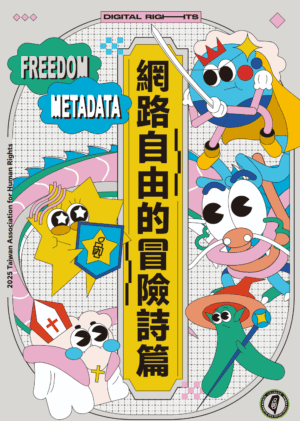
這是一本關於網路個資保存與網路內容管制的入門手冊。我們使用公開資料與申請政府資訊公開,調查追蹤《通訊保障及監察法》、 《詐欺犯罪危害防制條例》修法後的強制保存網路流量紀錄與停止解析、通報下架等措施的規劃與執行。除此之外,我們也在手冊中探究政府跨來源資料庫的個資保護情形與法律依據,並針對以上影響著隱私權與網路言論自由的措施提出政策建議。 網路自由的冒險詩篇,開啟冒險旅程

Must consumers passively accept privacy policies/terms that permit businesses to share and use their personal information? Is all that patients can do just tolerate their medical and social welfare information being used for research by third parties without individual consent; besides withdrawing after the fact, is there no better way to ensure the right of consent? The International Digital Human Rights Conference RightsCon was held in Taiwan this year and TAHR was selected to organize a roundtable discussion. Together with digital human rights citizen groups and experts from around the world, we collectively identify patterns of behavior that qualify as…

Forty years ago, freedom and democracy were still farfetched dreams in Taiwan. Our predecessors, risking their liberty and even their lives, laid the foundation for human rights and democracy. Today, we carry on their beliefs and perseverance, facing new challenges with the firm conviction that human rights are the foundation of nation-building. Over the past forty years, human rights awareness has progress despite of threats from the authoritarian regime. However, we are keenly aware that democracy and human rights may regress at any moment of complacency. A healthy democracy requires unfiltered voices. This year, we have delved into key issues…
The Fundamental Law of Artificial Intelligence is a castle in the air with no foundation. Since the Ministry of Science and Technology issued the “AI Research and Development Guidelines” in 2019, the National Science Council has announced a draft of the “Artificial Intelligence Basic Law” this year, attempting to catch up with international trends in regulating AI risks and safeguarding fundamental human rights. However, the draft lacks concrete governance paths for AI research, development and deployment. Furthermore, Article 5 states that the interpretation and application of other laws should “not hinder the development of new technologies,” which if passed, could…
Input for the Independent Expert’s report on AI and international solidarity to be presented to the 3rd Committee of the UN General Assembly in October 2024 submission prepared by Taiwan Association for Human Rights (TAHR) TAHR Founded in 1984, Taiwan Association for Human Rights (TAHR) is one of the most important and oldest human rights NGOs in Taiwan. TAHR has participated in many important democratic and human rights movements in Taiwan. Website: Contacts: info@tahr.org.tw, kuan@tahr.org.tw 2. Do you have access to procedures to communicate solidarity issues directly to AI Companies or State Institutions? What kind of procedure do you…

I-Chuan Wang, the Chief Executive Officer of the Democratic Progressive Party’s (DPP) Policy Research and Coordinating Committee, stated in a political talk show that it is possible to compare crowd attributes between protestors against the abuse of legislative power and participants of the May-19th gathering in front of the DPP headquarters as well as the campaign before the recent Presidential election. Regardless of how such comparisons were carried out in practice, the analysis of location-tracking data mentioned in Wang’s statement has already fallen under the scope of “another purpose of collection” as laid out in the Personal Data Protection Act…

TAHR seeks a court order mandating the MOI to provide transparency about the current status of data interfacing in the household registration system, citing illegal actions by the agency. This legal action follows a major data breach disclosed at the end of 2022, where over 23 million pieces of Taiwanese citizens' personal data were sold online.
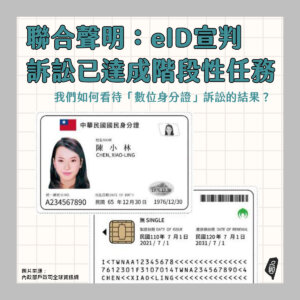
Joint Statement on the Adjudication of the Litigation of eID: Milestones Have Been Reached The preventive injunction litigation of eID began in 2020. It attempts to alleviate the dilemma of not being able to vote after the announcement of the expiration of the old ID card for those who refused the mandatory issuance of chip/digital ID cards under the “Total Replacement” new eID policy. The Taipei High Administrative Court today dismissed the lawsuit on the grounds that it did not fulfill the legal elements of “Preventive Injunction”. Despite the procedural non-compliance, the court stated in the gist of the reasoning…